
Services / Airspace & Flight Procedure Design
Instrument Flight Procedure Design
ICAO PANS-OPS and PBN procedure design for airports, aviation authorities and ANSPs, from concept through validation.
ICAO PANS-OPS and PBN procedure design for airports, aviation authorities and ANSPs, from concept through validation.

Altitude Nexus provides instrument flight procedure design and air navigation consultancy for airports, Civil Aviation Authorities and ANSPs. We design conventional and PBN procedures under ICAO PANS-OPS, helping teams balance safety, capacity and runway access. Explore the technical scope below, our PBN procedure design tools, air navigation consultancy and conventional-to-PBN feasibility studies.
When a procedure or airspace change is being considered, a feasibility study can compare the current operation with realistic PBN and airspace scenarios. Where suitable traffic and operational data are available, the comparison can estimate track miles, flight time, fuel, CO₂ and capacity. These are modelled outcomes, not guaranteed savings. See our airport and runway feasibility studies.
We design high-precision instrument procedures for both Conventional Navigation (VOR, NDB, ILS) and Performance Based Navigation (PBN). Our PBN services cover RNP APCH (LNAV, LNAV/VNAV, LPV) and complex RNP AR designs, ensuring optimal use of modern avionics and GNSS technology.
Airspace is a finite resource. We help ANSPs and airport operators restructure Terminal Control Areas (TMA) and Control Zones (CTR) to resolve traffic bottlenecks, implement CCO/CDO (Continuous Climb/Descent Operations), and reduce environmental noise footprint.
Quantifying the impact of new procedures is critical for stakeholder buy-in. Our fast-time simulation tools model high-level ATM concepts, detecting current traffic hotspots and quantifying sector capacity gains before implementation.

Fast-time simulation offers a cost-effective means of quantifying and evaluating system reliability and performance. Its primary objective is to support high-level decision-making related to system changes or the introduction of new procedures and technologies. To address these needs, a broad range of current and future air traffic management (ATM) concepts are modelled, generating analytical results within short timeframes. This approach reduces data preparation effort and allows more time for in-depth comparative analysis.
Detect current traffic hotspots, cuantify sector capacity and increase airspace management efficiency.
We use ASIT to calculate and validate Obstacle Assessment Surfaces (OAS), PANS-OPS protection areas and safeguarding evidence for instrument procedures, supporting ICAO and EASA compliance from concept through submission.
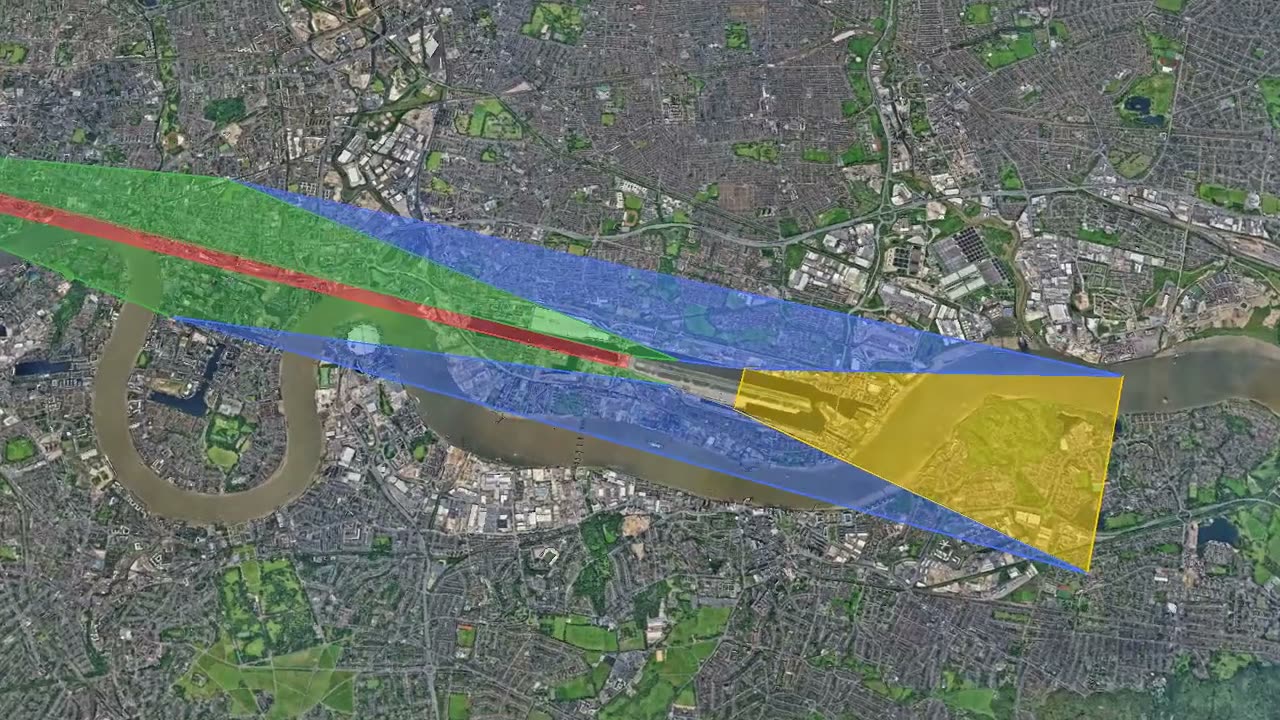 Learn about ASIT